Custom checks in every tool handler
Fine at first, until a new action path appears and the logic starts spreading again.
Action safety for production agents
ActOnce sits between agent intent and side effects, blocking duplicate emails, tickets, refunds, bookings, CRM updates, and workflow triggers before they happen.
Keep retries, queues, and webhooks turned on. ActOnce gives you one clean control layer for safe actions in production, without brittle one-off dedupe logic scattered across your stack.
Built for engineering-led teams shipping support, CRM, and workflow agents into production.

The problem
Most failures here are not dramatic. They are repetitive, expensive, and surprisingly common.
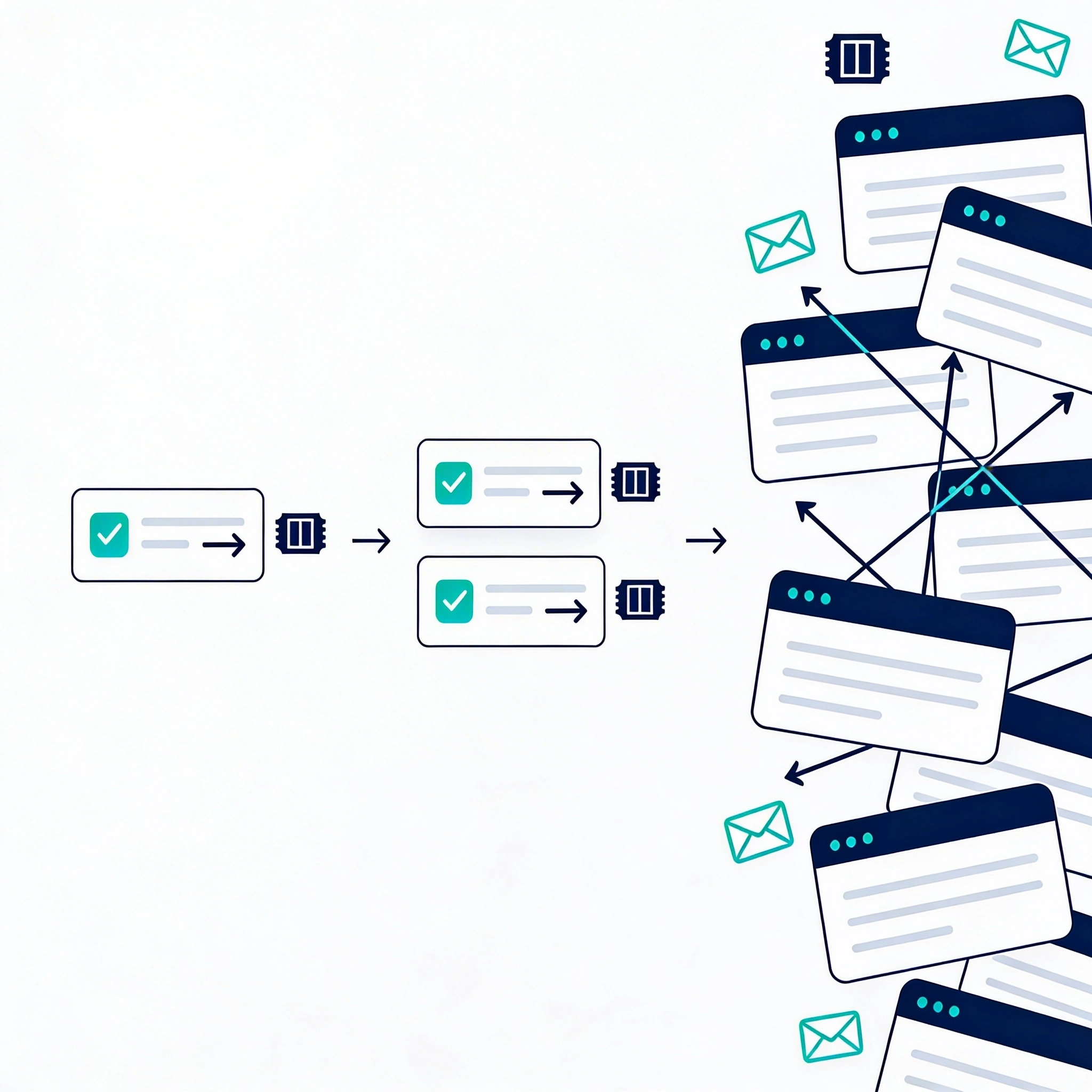
A model retries. A worker restarts. A queue redelivers. A webhook arrives twice. A timeout leaves the system unsure whether the action succeeded.
That is how teams end up doing manual cleanup, answering awkward customer questions, and trusting their automations less every time something weird happens.
Why current fixes wear out
Fine at first, until a new action path appears and the logic starts spreading again.
Quick to add, hard to standardise, and rarely consistent across every action type.
Helpful in places, but usually not enough to protect every side effect cleanly.
Less scary in the short term, but often worse for reliability over time.
How it works
You keep your existing agents and workflows. When an action could change the outside world, your app asks ActOnce whether it should proceed.
For example, send an email, create a ticket, issue a refund, or trigger a workflow.
The request includes the key plus the context needed to identify that exact action attempt.
If the action has already been accepted or completed, the repeat is recognised immediately.
The first valid attempt proceeds. Duplicate attempts are blocked or handled safely before the side effect repeats.
Use cases
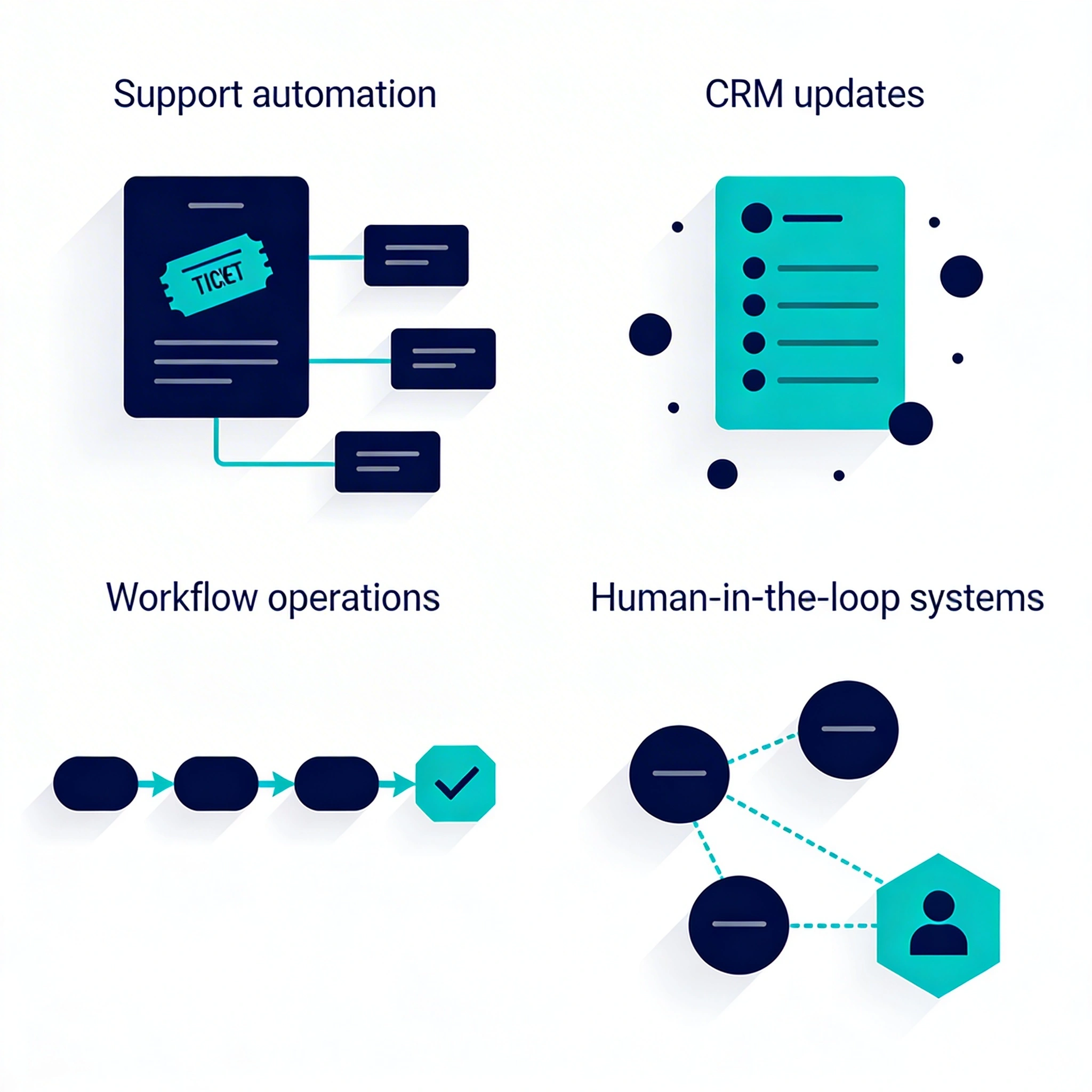
Prevent duplicate replies, repeated ticket creation, repeated escalations, and noisy status changes.
Stop repeated contact updates, notes, tasks, ownership changes, and follow-up sequences.
Guard against repeated bookings, approvals, internal notifications, and downstream automation triggers.
Protect side effects when work passes across queues, workers, review steps, and humans.
Why now
Teams are moving from internal demos to production agents that can message customers, update systems of record, and trigger live workflows.
The modern stack, including queues, retries, webhooks, workflow runners, and LLM tool calls, makes repetition likely. The real question is not whether duplicates can happen. It is whether you have a reliable layer to stop them.
Build vs buy
Most teams start with a few custom guards and tell themselves that is enough. Then the agent surface area grows, more actions get added, edge cases multiply, and the same protection pattern has to be rebuilt across handlers, jobs, queues, and workflow logic.
ActOnce gives you a dedicated layer for this job, so every new agent action does not reopen the same engineering problem. Instead of stitching together one-off protections, your team gets a consistent place to check, control, and reason about duplicate side effects.
This should feel like infrastructure, not glue code.
Pricing
Pay for the thing that matters: real-world actions protected from duplicate execution, not vague seat counts or bloated platform pricing.
Best for teams validating one live use case without building everything from scratch.
Best for early production teams that want confidence before duplicate-action cleanup gets expensive.
Best for higher-volume teams where duplicate actions become an operational and trust problem.
Start with the actions that carry the most operational risk, then expand coverage as agent usage grows.
Need higher volume, custom security review, procurement support, or SLA terms? Contact us for enterprise pricing.
FAQ
Engineers do not need hand-waving here. They want clear answers on retries, idempotency, framework fit, and whether this problem really exists outside payments.
ActOnce is an API product focused on preventing duplicate real-world actions from AI agents in production.
Teams shipping support, CRM, and operations agents, especially engineering-led startups and product teams.
Examples include emails, ticket creation, refunds, bookings, CRM updates, and workflow triggers.
No. The goal is to make retries safer, not remove them.
You should use them where they exist. The problem is that not every downstream system offers good idempotency support, and most teams do not want different protection patterns for every tool or provider.
No. Payments made idempotency famous, but support, CRM, and operations agents hit the same issue constantly.
ActOnce is being positioned as infrastructure around agent actions rather than something tied to one framework. Exact integrations can evolve.
Yes. Teams with higher volume, custom security requirements, procurement steps, or SLA needs can contact ActOnce for a custom package.
Join Waitlist
Join the waitlist for early access, launch updates, and the first production-ready release.
This is for technical teams with a real duplicate-action problem, not passive newsletter subscribers. Tell us your use case so we can prioritise the right early users.

Tell us what you are trying to protect so early access can be shaped around real production use cases.
We review every request manually and prioritise teams with real production use cases.
Request received
Thanks. Your request has been saved, and we’ll review it against current ActOnce early-access priorities.